The dimensional tolerances for rubber components are typically determined based on the product's structural design, mold precision, and functional requirements. Currently, the industry largely relies on ISO 3302-1-or equivalent national standards-to establish a tiered system for tolerance control. Common rubber products are classified as elastomeric materials; as such, they inherently undergo shrinkage and deformation during the molding and vulcanization processes. Consequently, their tolerance ranges are generally more lenient than those for metal or plastic components and must be established on a case-by-case basis, taking specific functional requirements into account.
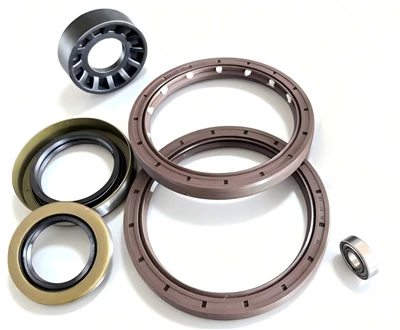
Dimensional tolerances for rubber components are typically categorized into various grades, such as Precision, General, and Economic. For instance, components used for sealing or assembly-fit applications-where critical dimensions (such as inner diameter, outer diameter, or cross-sectional thickness) are paramount-are subject to relatively strict tolerance controls. Conversely, for non-mating or cosmetic components, tolerances may be appropriately relaxed to reduce manufacturing costs and improve yield rates. In actual design practice, the final tolerance range is typically established by collectively considering factors such as the mold parting structure, demolding shrinkage rate, and material hardness.
Regarding inspection procedures, dimensional measurements must focus specifically on the critical dimensions annotated on the engineering drawings, utilizing tools such as calipers, optical projectors, or specialized gauges. Given the inherent elasticity of rubber, it is essential to standardize the applied force and measurement conditions during inspection to prevent data discrepancies caused by material compression. Furthermore, during mass production, dimensional verification is typically conducted in accordance with established sampling standards; any components found to be out of tolerance are then categorized and processed accordingly to ensure overall assembly consistency and operational reliability.