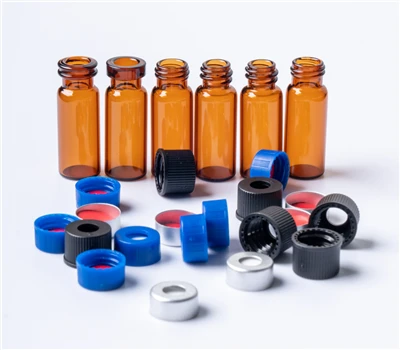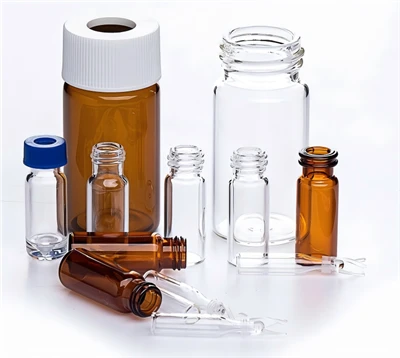

Sample vials come in a wide variety of materials, commonly including glass, plastic, and metal. Each material offers unique advantages and limitations, making them suitable for different experimental requirements.
Glass sample vials: These offer excellent corrosion resistance and high-temperature stability, making them suitable for most organic solvents as well as acidic and alkaline solutions. However, they are relatively fragile and require careful handling.
Plastic sample vials: These are lightweight, portable, and shatter-resistant, though their chemical and temperature resistance may be inferior to that of glass vials. A wide range of plastic types exists; the appropriate material-such as PP, PE, or PTFE-should be selected based on the specific characteristics of the sample.
Metal sample vials: Typically made of stainless steel, these offer excellent corrosion resistance and mechanical strength, making them suitable for specialized experimental conditions, such as high-pressure or high-temperature environments.