
With the continuous advancement of science and technology, various industrial sectors have experienced rapid growth and qualitative leaps. Wide-mouth bottles, which were once manufactured exclusively from glass, can now also be produced and utilized in plastic versions.
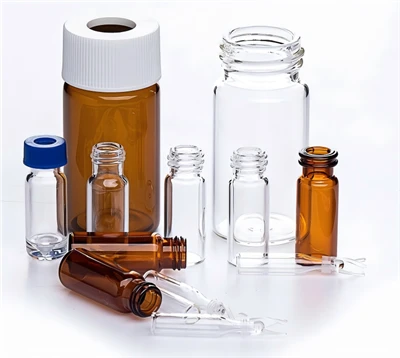
A wide-mouth bottle is a glass container designed for storing solid reagents. Typically used for reagent storage, these bottles feature a ground-glass inner neck designed to fit a matching stopper. They come in both clear and amber (brown) varieties; the latter is used for reagents that must be protected from light. It is important to note that wide-mouth bottles with glass stoppers should not be used to store strongly alkaline solids, as these substances can react with the silicon dioxide in the glass, causing the stopper to become fused to the bottle neck. For alkaline reagents, a rubber stopper must be used instead. These bottles are not intended for heating. When placing them on a shelf, ensure the labels are facing outward. Depending on the specific reagent, either a wide-mouth or a narrow-mouth bottle may be required.
Today, plastic wide-mouth bottles are widely used in daily life-for instance, to hold various beverages and food products-and are equally suitable for storing laboratory reagents or chemicals. Plastic wide-mouth bottles intended for reagents are generally made from polypropylene (PP). This material offers excellent resistance to acids, bases, salts, and many organic solvents. It is characterized by high chemical resistance, heat resistance, electrical insulation, high mechanical strength, and good wear resistance.
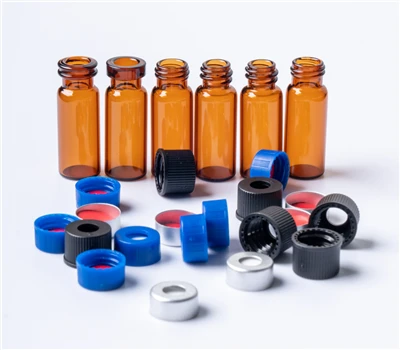
Narrow-mouth bottles feature a relatively small opening and a long, slender neck; they are primarily used for storing liquid substances. Glass narrow-mouth bottles are extensively employed for liquid reagents, though they can also be used for powdered solids. They are typically available in amber or clear glass and are not suitable for heating. The small opening facilitates the pouring of liquids while helping to minimize the evaporation of the reagents. To clean a narrow-mouth bottle, you can add crushed eggshells and some warm water, then shake the bottle vigorously-a method that effectively cleans the interior.
Narrow-mouthed and wide-mouthed bottles are easy to distinguish by their appearance: narrow-mouthed bottles have a relatively long, slender neck, while wide-mouthed bottles have a larger opening and a comparatively shorter neck. In terms of function, narrow-mouthed bottles are primarily used for storing liquids, whereas wide-mouthed bottles are mainly used for storing solids. Neither type of bottle should be used for heating.