Performance testing for silicone components primarily focuses on their physical properties, chemical stability, and functional parameters, aiming to ensure their reliability and safety during actual use. Routine testing encompasses metrics such as hardness, tensile strength, elongation at break, and compression set. Hardness indicates the material's relative softness or rigidity; tensile strength and elongation at break reflect its mechanical endurance capabilities; and compression set evaluates its elastic recovery performance after prolonged exposure to compressive stress.
Testing for chemical and environmental properties is equally critical, covering aspects such as thermal resistance, aging resistance, oil resistance, and resistance to chemical media. Thermal resistance testing verifies that silicone components maintain their elasticity and dimensional stability under both high and low-temperature conditions. Aging resistance testing simulates long-term usage or environmental exposure to observe whether the material exhibits signs of hardening, cracking, or chalking. Furthermore, testing for oil and chemical media resistance assesses the components' expected service life within specific chemical environments.
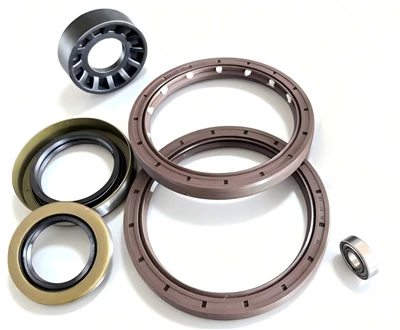
Functional testing is conducted based on the specific application of the component. For instance, sealing components require tests for sealing integrity or leak prevention; vibration-damping components necessitate dynamic fatigue or damping performance tests; and thin-walled or complex-structured components may require inspections regarding dimensional accuracy and surface finish. Through this systematic performance testing regimen, it is possible to guarantee that silicone components meet design specifications during assembly and operation, thereby minimizing the risk of failure and enhancing the overall reliability of the final product.