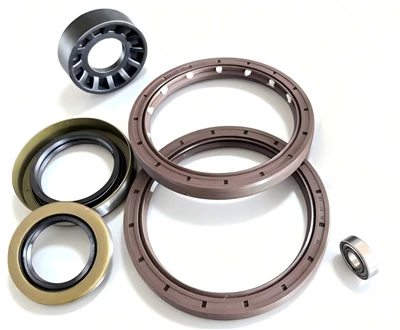
The selection of rubber components begins with a clear definition of the operating conditions, including the type of medium, operating temperature, pressure range, and the presence of dynamic motion or shock loads. Different operating conditions impose vastly different requirements on material properties; for instance, nitrile rubber is typically the preferred choice for oil-resistant environments, whereas silicone rubber or fluororubber are better suited for high-temperature environments or conditions involving alternating high and low temperatures. If the operating medium is highly corrosive or possesses unique chemical properties, particular emphasis must be placed on evaluating the material's chemical stability.
Secondly, the selection process should take into account both the structural function and the manner in which the component is subjected to stress. For sealing applications, priority should be given to factors such as compression ratio, resilience, and long-term compression set characteristics to ensure reliable sealing performance. For vibration-damping or cushioning components, the focus shifts to hardness, dynamic fatigue resistance, and energy absorption capacity. For rubber components used in connection or compensation applications, it is also essential to consider the required displacement compensation range and any constraints regarding installation space, thereby avoiding assembly difficulties or premature failure caused by design mismatches.
Finally, the selection process must also balance manufacturing feasibility with cost considerations. Different molding methods impose specific limitations on structural complexity and dimensional precision; for example, compression molding is well-suited for simple structures produced in small to medium batches, whereas injection molding is more appropriate for complex structures and large-scale production. Furthermore, a comprehensive assessment-integrating factors such as service life requirements and maintenance cycles-should be conducted to avoid basing the selection solely on a single performance metric, thereby ensuring both the overall operational reliability and economic efficiency of the chosen component.