Industry standards for rubber components primarily govern aspects such as material properties, dimensional tolerances, and testing methodologies. Internationally, widely adopted standard systems include ISO and ASTM; for instance, the ISO system is utilized to control dimensional tolerances and general requirements, while ASTM D2000 is frequently employed for the classification and definition of performance grades for rubber materials. Domestically, the GB/T series of standards predominates, establishing unified regulations for the physical properties, inspection methods, and technical specifications of rubber products.
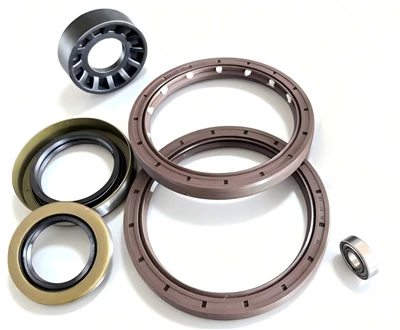
Regarding specific application standards, different types of rubber components are subject to corresponding specialized standards. For example, O-rings typically reference ISO 3601 or relevant GB/T standards to regulate dimensions, tolerances, and surface quality requirements; sealing products involve testing standards related to properties such as compression set and resistance to various media; whereas vibration-damping components or structural parts place greater emphasis on metrics such as hardness, tensile strength, and fatigue performance. Collectively, these standards constitute the technical basis for the design and acceptance of rubber components.
In actual production and inspection processes, industry standards are typically applied in conjunction with customer technical specifications or engineering drawings. In instances where discrepancies exist between industry standards and customer requirements, the more stringent requirement generally takes precedence. Furthermore, various industries-such as automotive, electronics, and power generation-often supplement general industry standards with enterprise-specific specifications to meet heightened requirements for reliability and consistency, thereby ensuring the stable performance of products under actual operating conditions.