Rubber components can be classified in various ways, most notably according to their material systems. Common types include natural rubber, styrene-butadiene rubber (SBR), nitrile rubber (NBR), silicone rubber, fluororubber, and neoprene. Different materials exhibit significant variations in their resistance to temperature, oil, abrasion, and aging; consequently, the specific type of rubber selected is determined by the intended operating environment. For instance, nitrile rubber is frequently utilized in oil-resistant sealing applications, silicone rubber is well-suited for environments involving extreme high or low temperatures, while fluororubber is typically employed in conditions involving high temperatures and highly corrosive media.
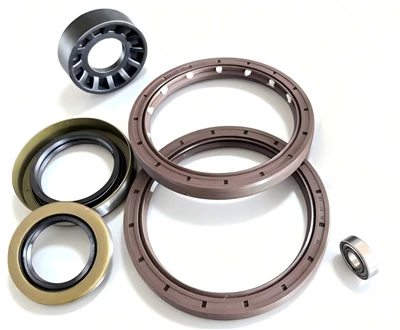
Rubber components can be further categorized into sealing, vibration-damping, connecting, and protective types. Sealing products-such as O-rings, oil seals, and gaskets-are primarily designed to prevent media leakage. Vibration-damping components-such as damping pads and rubber bushings-serve to absorb impact and mitigate vibration. Connecting components-such as flexible connectors and rubber joints-are used to compensate for displacement and reduce stress transmission. Protective components, including dust covers and protective sleeves, primarily function to provide isolation and physical protection.
Based on manufacturing processes, rubber components can also be classified into compression-molded parts, extruded parts, injection-molded parts, and liquid silicone products. The specific manufacturing process employed dictates the product's dimensional precision, production efficiency, and the complexity of the structural designs that can be accommodated. Compression molding is suitable for products with relatively simple structures; extrusion is predominantly used for continuous profiles; injection molding is ideal for complex geometries and high-volume production; and liquid silicone products are frequently utilized in fields requiring high levels of cleanliness or precision.