The molding of rubber components relies on the vulcanization characteristics of rubber-specifically, the process of adding vulcanizing agents to cross-link linear rubber molecules, thereby forming a three-dimensional network structure that imparts elasticity, strength, and thermal resistance to the material. Common processes include:
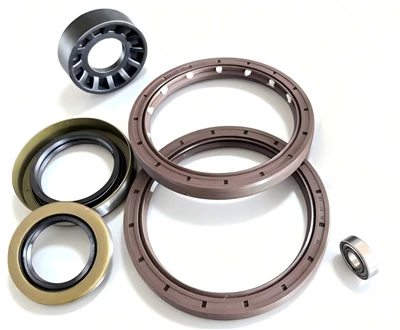
Compression Molding: Suitable for rubber components with complex geometries and high precision requirements (such as sealing rings and vibration-damping pads). This method utilizes high temperature and pressure to cure and shape the rubber within a mold, allowing for tolerance control within ±0.1 mm.
Injection Molding: Used for producing rubber components containing metal inserts (such as protective boots for automotive connectors). This process involves melting rubber granules and injecting them into a mold using an injection molding machine; it offers high production efficiency, with the cycle time per unit potentially reduced to as little as 30 seconds.
Extrusion Molding: Primarily used to manufacture tubular or strip-shaped rubber components (such as cable sheathing and sealing strips). This method employs a screw extruder for continuous production, allowing for lengths reaching tens of meters, and offers superior uniformity in cross-sectional dimensions compared to other processes.