The working principle of rubber components is primarily based on the high elasticity and reversible deformation characteristics inherent to rubber materials. When subjected to external forces, the molecular chains within the rubber undergo stretching, compression, or shear deformation, thereby absorbing energy. Once the external force is removed, these molecular chains rely on their inherent resilience to revert to their original state; consequently, rubber components are able to fulfill functions such as cushioning, sealing, and vibration damping.
Sealing Applications
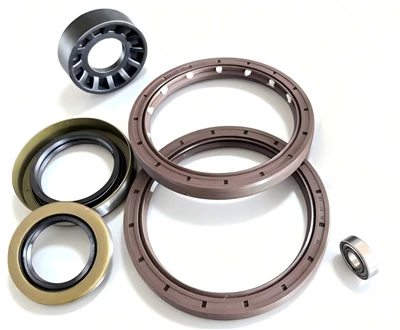
Rubber components achieve a sealing effect by undergoing elastic deformation under pressure, allowing them to fit tightly against mating surfaces and fill microscopic gaps, thereby blocking potential leakage paths for liquids or gases. This sealing capability relies on the material's resistance to compression set and its inherent resilience, ensuring that an effective seal is maintained even under prolonged compressive loads.
Vibration Damping and Cushioning
Through the process of deformation, rubber components convert mechanical energy into thermal energy, which is then dissipated, thereby reducing the transmission of vibrations and shocks. Furthermore, their inherent damping properties serve to suppress resonance, thereby enhancing the operational stability of the overall system. Consequently, rubber components are frequently utilized as critical energy-absorbing and vibration-isolation elements in mechanical equipment, automotive systems, and precision instruments.