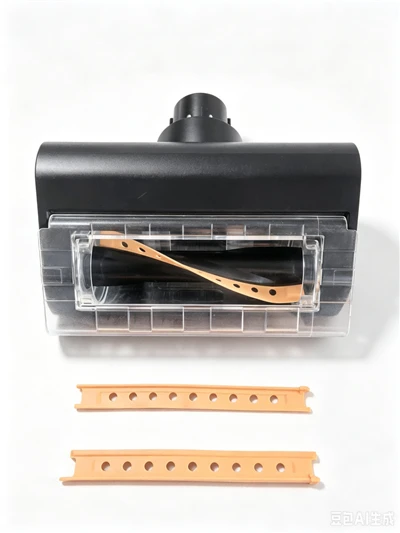
The technical parameters of an internal insertion tube primarily encompass dimensional specifications, material properties, fluid compatibility, and operating environment conditions, all of which are critical for ensuring its safety and functional reliability within a system. Dimensional specifications-including tube diameter, wall thickness, length, and insertion depth-serve as key indicators for ensuring proper alignment with pipeline or vessel interfaces, as well as for guaranteeing effective sealing and stable fluid flow. For diversion-type or perforated insertion tubes, specific details regarding hole diameter, hole count, and spacing distribution must also be defined to ensure uniform fluid distribution.
Material property parameters cover aspects such as corrosion resistance, thermal stability, pressure resistance, and mechanical strength. Plastic materials-such as PE, PP, or PTFE-must satisfy the chemical compatibility requirements and operating temperature range of the conveyed medium; conversely, metallic materials-such as stainless steel-must possess sufficient strength and corrosion resistance to withstand system pressures and endure long-term operation. For rubber-based or elastomeric materials, particular emphasis is placed on elastic recovery capabilities and sealing performance.
Operating environment parameters include working temperature, operating pressure, and fluid characteristics. In high- or low-temperature environments, the insertion tube must be capable of maintaining its structural integrity without undergoing deformation or material degradation; in high-pressure environments, it must demonstrate sufficient mechanical strength and sealing capability. Furthermore, when handling specialized media-such as strong acids, strong bases, or volatile liquids-additional considerations regarding chemical stability and safety are imperative. Collectively, these technical parameters determine whether an internal insertion tube can operate reliably over the long term within various system configurations.