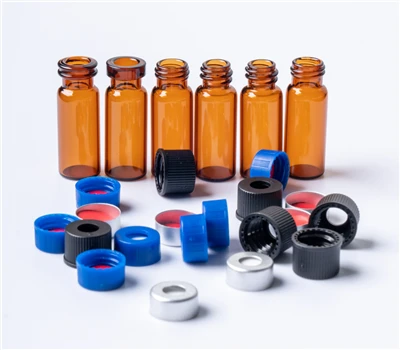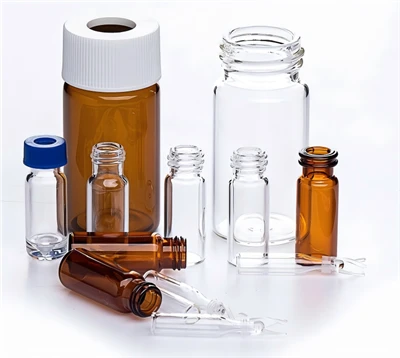
Reagent bottles can be classified in various ways; commonly, they are categorized based on their intended use, structural form, and material composition. In terms of usage, they can be broadly divided into categories such as reagent storage bottles, sampling bottles, and reaction auxiliary vessels. Reagent storage bottles are designed for the long-term preservation of chemical reagents, prioritizing airtightness and stability; sampling bottles are used for the short-term storage or transfer of samples; additionally, some reagent bottles may also serve as temporary reaction vessels during experimental procedures.
Structurally, reagent bottles primarily include wide-mouth bottles, narrow-mouth bottles, dropping bottles, and ground-glass stoppered bottles. Wide-mouth bottles facilitate the easy loading and retrieval of solid reagents, making them suitable for powdered or granular substances; narrow-mouth bottles are better suited for the storage and pouring of liquid reagents, as their design effectively minimizes evaporation; dropping bottles typically feature an integrated dropper mechanism, allowing for the precise addition of small volumes of liquid; finally, ground-glass stoppered bottles achieve superior airtightness through precision-ground glass joints, making them ideal for storing reagents that require a high degree of gas-tightness.
Regarding materials, reagent bottles fall into two main categories: glass reagent bottles and plastic reagent bottles. Glass reagent bottles are typically manufactured from borosilicate glass, offering excellent resistance to corrosion and high temperatures, making them suitable for use with most chemical reagents. Plastic reagent bottles, conversely, are commonly made from materials such as polyethylene (PE) or polypropylene (PP); characterized by their light weight and resistance to breakage, they are well-suited for storing certain routine or mildly corrosive reagents.